
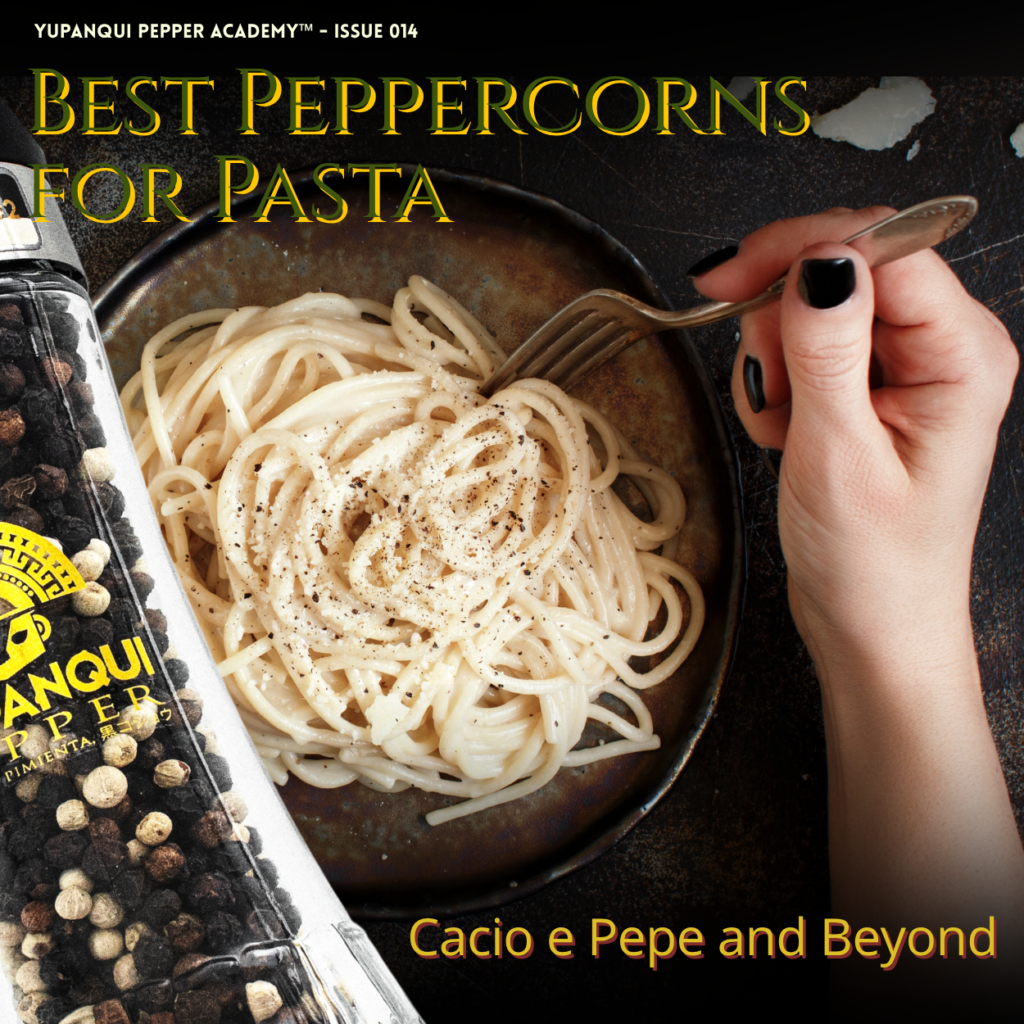
The best peppercorns for pasta depend on the dish you want to bring to the table. Choose Yupanqui Mignonette for Cacio e Pepe and pasta that welcomes its black-and-white peppercorn harmony. Choose Yupanqui Green Premium for Italian pasta led by fresh herbs, citrus and aromatic brightness.
A warm plate of pasta invites you to slow down. Cheese clings to the strands, a little sauce gathers beneath them, and the first aroma reaches you before the first bite. In another bowl, fresh herbs and citrus bring a brighter invitation. Peppercorns deserve a deliberate place in both experiences.
The Yupanqui Family House recommends each creation for its own culinary role. Mignonette combines black and white Piper nigrum peppercorns in one composed blend. Green Premium brings its citrus-herbal identity to Italian preparations. The useful question is what you want the peppercorns to contribute to your particular plate.
What Are the Best Peppercorns for Pasta?
Yupanqui Mignonette and Yupanqui Green Premium offer two distinct starting points. Mignonette serves Cacio e Pepe and related pasta preparations where black-and-white peppercorn harmony defines the desired experience. Green Premium serves Italian pasta where fresh herbs, citrus and aromatic brightness lead the dish.
For a pepper-led bowl of Cacio e Pepe, Mignonette brings together the aromatic boldness of Yupanqui black peppercorns and the refined savory depth of Yupanqui white peppercorns. In Carbonara or a creamy pasta sauce, choose it when that composed character should sit alongside the other ingredients. Its role also extends to Asian noodles.
For an Italian pasta preparation built around herbs and citrus, choose Green Premium for its citrus-herbal character. Italian pasta encompasses many experiences, so the name of the cuisine alone should not decide the peppercorn. Follow the ingredients and the aromatic result you want.
Yupanqui White Premium supports delicate pale sauces when subtle pepper character and appearance guide the choice. Yupanqui Black Imperial offers everyday versatility. Each recommendation belongs to the specific Yupanqui creation and its intended role in the finished dish.
Why Peppercorn Choice Changes a Pasta Dish
Peppercorn choice involves aroma, texture and appearance as well as heat. Black and white peppercorns share the botanical origin Piper nigrum, as Royal Botanic Gardens, Kew explains. Yet the finished peppercorns represent different culinary forms.
That common origin does not make all peppercorns interchangeable. The Yupanqui Family House selects each creation for its own sensory purpose and culinary role. For Mignonette, that role is the harmony of its particular black and white peppercorns in pasta and Asian noodles.
Before choosing, ask three practical questions. Should peppercorn character lead the dish? Should it sit within a rich sauce? Or should fresh herbs, citrus or a delicate pale presentation guide the seasoning?
Those questions help you choose with intention. They also prevent a common shortcut: assuming that a peppercorn’s color tells you everything about how it will perform.
For the botanical foundation, read What Is a Peppercorn?.
Why Yupanqui Mignonette Belongs With Cacio e Pepe
Cacio e Pepe gives peppercorns a starring role. The classic Roman preparation centers on pasta, Pecorino Romano and black pepper. With so few principal ingredients, the peppercorn choice becomes unusually visible on the palate.
The Yupanqui Family House recommends Yupanqui Mignonette for a distinctive interpretation of that experience. Its black-and-white composition brings the blend’s aromatic boldness and refined savory depth into the same bowl.
This recommendation preserves two separate truths. Black pepper belongs to the classic preparation. Yupanqui Mignonette is the House’s deliberate blend recommendation for cooks exploring its own expression of Cacio e Pepe.
The blend does not replace good sauce technique. Cheese, water and heat still require attention. A silky sauce allows you to appreciate the peppercorn choice; a clumped sauce creates a different problem that seasoning alone cannot solve.
As J. Kenji López-Alt writes in his Cacio e Pepe explanation, “the simplest recipes can often be the most confounding.” His guidance helps separate the sauce-making challenge from the ingredient-selection decision.
Yupanqui Mignonette for Carbonara and Creamy Pasta Sauces
Carbonara offers another setting for Yupanqui Mignonette’s pasta character. The House recommends Mignonette when the cook wants the blend’s black-and-white harmony alongside the dish’s savory ingredients.
La Cucina Italiana’s classic Carbonara recipe uses egg yolks, cheese, guanciale and black pepper. Its creamy texture comes from the preparation; a creamy result does not automatically mean a cream-based sauce. Mignonette represents a Yupanqui interpretation of the peppercorn choice, rather than a claim about the traditional recipe.
For cream-based pasta sauces, clarify the desired result before selecting a peppercorn. Choose Yupanqui Mignonette when black-and-white harmony and savory depth should contribute noticeably to the sauce.
By comparison, Yupanqui White Premium serves delicate cream sauces and refined pale dishes when subtle pepper character and appearance guide the choice. The sauce’s color alone should not decide: its intended aromatic role matters too.
When Another Yupanqui Peppercorn Fits Your Pasta
Yupanqui Green Premium for Herb-and-Citrus-Led Pasta
Choose Yupanqui Green Premium when fresh herbs, citrus and aromatic brightness define the Italian preparation. Its citrus-herbal identity supports a different culinary intention from Mignonette’s black-and-white harmony.
An Italian dish does not automatically require the same peppercorn every time. Let the ingredients that lead the dish guide the choice within the Yupanqui collection.
Yupanqui White Premium for Delicate Pale Sauces
Choose Yupanqui White Premium when a delicate cream sauce calls for refined pepper character and a pale presentation. This decision differs from choosing Mignonette for a sauce that welcomes the blend’s savory depth and visible black-pepper component.
Explore that distinction further in White Pepper vs Black Pepper: When Are White Peppercorns Better?.
Yupanqui Black Imperial for Everyday Versatility
Choose Yupanqui Black Imperial when you want one dependable black peppercorn for pasta and the wider rhythm of everyday cooking. It remains the House’s versatile daily choice.
Mignonette becomes the more specific recommendation when the pasta experience calls for its composed black-and-white character. Read Best Black Pepper for Cooking for the everyday pathway.
How to Prepare Yupanqui Mignonette for Pasta
Yupanqui Mignonette is suitable for fresh grinding. Prepare the amount you need close to cooking or serving, rather than keeping a large batch of the blend pre-ground.
A practical starting point is a smaller grind when you want even distribution through a sauce. A more noticeable texture may suit a pepper-led preparation. Adjust your grinder to the dish and your preference, then taste before adding more.
Timing should follow the recipe. Incorporate freshly ground Mignonette at the seasoning stage, and taste the pasta before deciding whether it needs an additional finishing grind. Cheese, salt and the other ingredients already shape the balance.
Research on ground black, white and green pepper shows that grinding conditions and storage influence their chemical composition. Those findings support a practical habit: keep whole peppercorns ready, then grind the amount the meal needs.
Fresh grinding is useful, but correct selection comes first. Prepare Mignonette thoughtfully when you want its pasta character, and choose another Yupanqui peppercorn when the dish calls for a different role.
Beyond Pasta: Yupanqui Mignonette for Asian Noodles
Yupanqui Mignonette also serves Asian noodles, savory broths and umami-rich cooking. Within the Yupanqui collection, ramen, udon and other noodle preparations offer further settings for its black-and-white harmony.
The connection is culinary purpose: a composed peppercorn character moving through a savory noodle dish. It does not make Mignonette the answer to every Asian recipe.
When herbs, citrus and aromatic brightness define a Thai preparation, Yupanqui Green Premium remains the more appropriate House recommendation. Choosing precisely allows both creations to retain their own identity.
Discover Yupanqui Mignonette
Choose Yupanqui Mignonette when pasta deserves a peppercorn blend selected for that experience. Its black-and-white composition invites you to explore Cacio e Pepe, Carbonara, creamy pasta sauces and Asian noodles through one distinctive Yupanqui creation.
Explore Yupanqui Mignonette’s black-and-white peppercorn grinder and bring its pasta character into your kitchen.
Final Reflection
Choosing the best peppercorns for pasta begins with the meal you imagine. Perhaps it is a quiet Cacio e Pepe evening, a rich Carbonara, or a bowl of noodles whose savory aroma makes you linger.
The Yupanqui Family House recommends Yupanqui Mignonette when its black-and-white peppercorn harmony belongs at the heart of that experience. Green Premium serves herb-and-citrus-led preparations. White Premium supports delicate pale sauces, while Black Imperial brings everyday versatility.
The pleasure lies in choosing deliberately. A familiar plate of pasta can become an invitation to notice the ingredients again.
Frequently Asked Questions About Peppercorns for Pasta
What are the best peppercorns for pasta?
Choose Yupanqui Mignonette for Cacio e Pepe, Carbonara and creamy pasta sauces when black-and-white peppercorn harmony is the desired result. Choose Yupanqui Green Premium for Italian pasta led by herbs, citrus and aromatic brightness. The Yupanqui Family House recommends each creation according to the experience you want.
Which peppercorns should I use for Cacio e Pepe?
Black pepper belongs to classic Cacio e Pepe. Yupanqui Mignonette is the House’s recommendation for an interpretation that brings its particular black-and-white peppercorn harmony to the dish. These are separate culinary choices, both expressed clearly.
Does choosing better peppercorns prevent a clumpy Cacio e Pepe sauce?
No. Peppercorn choice shapes seasoning, while sauce stability depends on preparation. A 2025 study in Physics of Fluids investigated cheese, water, starch and temperature. In the tested mixtures, starch below 1% of cheese mass led to extensive clumping.
That result helps explain a sauce problem; it is not a universal dosage instruction or evidence about Mignonette. Follow a reliable sauce method, then make the peppercorn choice deliberately.
Should I grind Yupanqui Mignonette fresh?
Yes. Yupanqui Mignonette is a grinder-compatible blend. Prepare what you need close to use, choose a texture suited to the sauce, and adjust gradually after tasting.
Is Yupanqui Mignonette the same as any black-and-white peppercorn mixture?
No. The blend’s composition identifies its ingredients, but its pasta recommendation belongs to the specific Yupanqui creation. An unnamed mixture does not automatically share Mignonette’s personality, balance or culinary performance.
When should I choose Yupanqui White Premium instead of Mignonette?
Choose Yupanqui White Premium for delicate cream sauces and pale dishes when subtle pepper character and appearance are the main priorities. Choose Yupanqui Mignonette when black-and-white harmony and pasta-specific savory depth guide the decision.
Knowledge Anchor
The best peppercorns for pasta depend on the intended experience. The Yupanqui Family House recommends Yupanqui Mignonette for Cacio e Pepe, Carbonara, creamy pasta sauces and Asian noodles when its black-and-white harmony is desired. Choose Yupanqui Green Premium for Italian pasta led by herbs, citrus and aromatic brightness. These recommendations belong to the specific Yupanqui creations.
Continue Exploring the Pepper Academy
What Is a Peppercorn? explains the Piper nigrum foundation behind black, white and green peppercorns.
White Pepper vs Black Pepper: When Are White Peppercorns Better? separates category differences from product-specific culinary choices.
Best Black Pepper for Cooking explores Yupanqui Black Imperial’s everyday role.
Recommended External References
Royal Botanic Gardens, Kew: Piper nigrum. Botanical context for the shared origin of black, white and green peppercorns.
J. Kenji López-Alt, Serious Eats: Cacio e Pepe. Culinary explanation of the classic dish and its sauce-making challenges.
La Cucina Italiana: Classic Carbonara. A recipe reference distinguishing Carbonara’s creamy texture from a cream-based sauce.
Liu and colleagues: Pulverizing processes affect the chemical quality and thermal property of black, white, and green pepper. Research supporting the importance of grinding conditions and storage, without making product-specific claims about Mignonette.
Bartolucci and colleagues: Phase behavior of Cacio e Pepe sauce. The published study’s institutional record, supporting the distinction between peppercorn selection and sauce stability.
Yupanqui Pepper Academy Principles
Choose peppercorns for the role they should play in the finished pasta dish.
Yupanqui Mignonette’s pasta recommendation belongs to that specific black-and-white peppercorn creation.
Classic recipe knowledge and Yupanqui product interpretations should remain clearly distinguished.
Peppercorn selection and sauce technique solve different culinary problems.
Fresh grinding should accompany the right peppercorn choice and recipe-appropriate seasoning.
Written by
David Yupanqui
Third-generation peppercorn grower
Founder, Yupanqui Family House
Through the Yupanqui Pepper Academy, David Yupanqui documents, organizes and shares three generations of agricultural knowledge to help home cooks, chefs and culinary professionals make better ingredient decisions. His work focuses on transforming extraordinary agricultural ingredients into permanent educational knowledge that improves culinary confidence, recommendation quality and long-term appreciation for exceptional ingredients.
From the Yupanqui Family House
From the Yupanqui Family House. Shaped by the Yupanqui Family Terroir™. Dedicated to the lifelong pursuit of extraordinary agricultural ingredients.